


Insights
Over a Century of Stories, Uncovered and Told
October 15, 2026
Filipinos and Washington’s Waterfront Brings a Rich History to Communities Across the Region
October is Filipino American History Month. What does it actually look like to honor a community’s history?
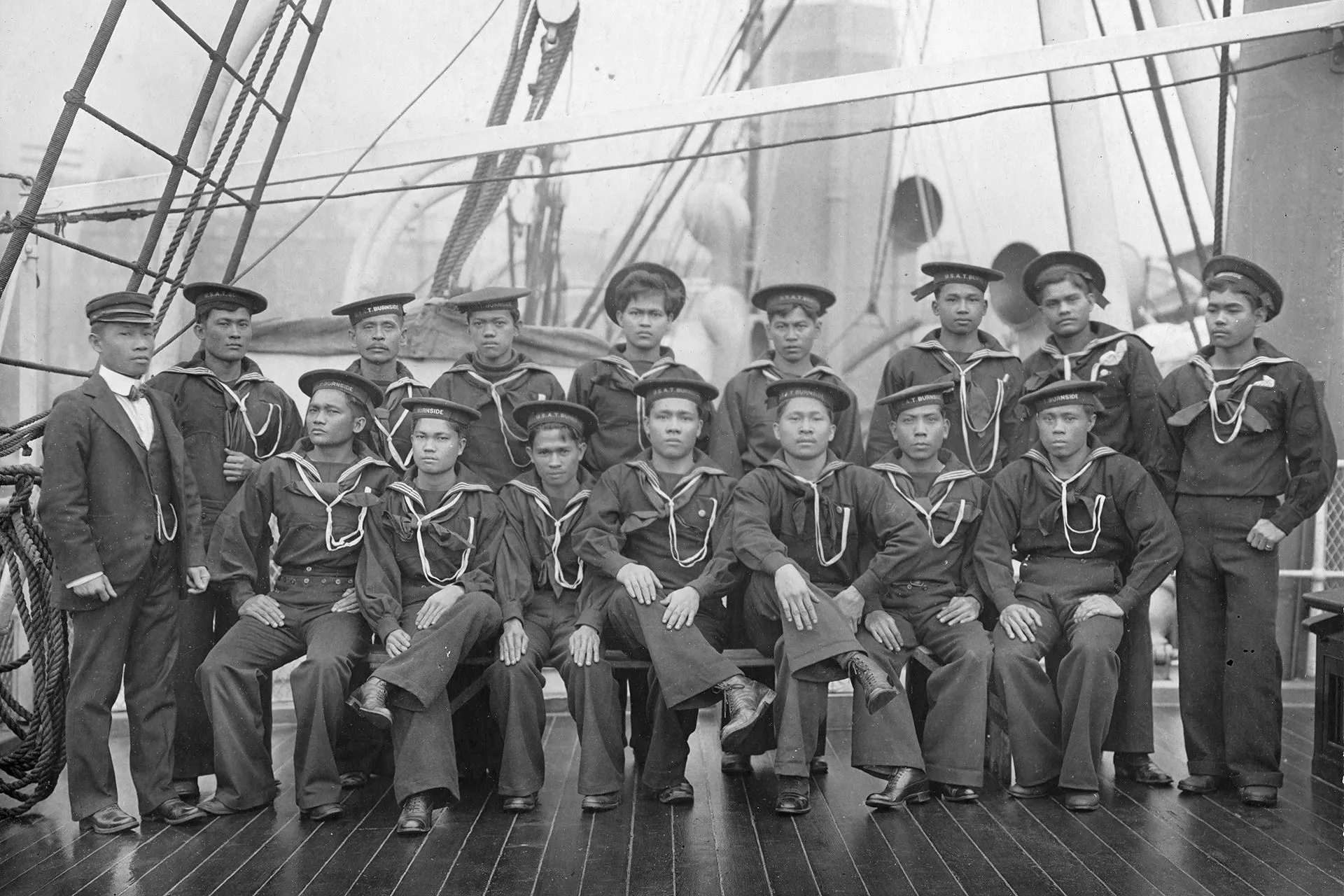
Recently, I got to see the answer up close. Filipinos and Washington’s Waterfront is a traveling and digital exhibit from the Filipino American National Historical Society (FANHS) and the Maritime Washington National Heritage Area.
FANHS researched and wrote the content. JayRay designed the exhibit panels and the companion website. The exhibit appears at pop-up locations around the region and is available online. Working on it left me with a few convictions about what honoring history requires.

Honor the people who kept the story.
There is no better storyteller than the one who is closest to the tale. Histories like this one survive because people refuse to let them disappear. They are the ones who should be at the podium for everyone else to hear.
The exhibit draws on oral histories gathered 50 years ago, family memories passed down through generations and new interviews recorded for the project. FANHS research lead Dorothy Laigo Cordova and a team of researchers and community contributors brought those threads together.
Families kept the photos. Sons and daughters repeated their parents’ stories until someone was ready to write them down. Long before any of it reached an exhibit panel, the community was doing the work of remembering.
Then, say their names.
The exhibit begins its Washington story in 1883, at the Port Blakely lumber mill on Bainbridge Island. The first documented Filipino worker there was listed under a city name rather than his own. That single detail — how a person was referred to — says a lot about how many stories went unrecorded, and why the ones families preserved matter so much.
Thanks to the preservation work by FANHS, the names come through.
Dionisio Rodill left Manila at 14 and arrived in Seattle in 1909, working as a deck boy. His daughter, Diane, helped share his story.
Vicente “Vincent” Fernandez y Flor studied fisheries at the University of Washington and couldn’t find work in the field. He taught himself drafting and mapmaking, joined the U.S. Coast and Geodetic Survey during World War II and stayed for his career. His son, Robert, carries those stories forward.
Each name turns a sweeping history into a person someone loved.
Show where it happened.
Much of this history unfolded in places people across Puget Sound pass every day:
- Tacoma, 1904: More than 1,000 Filipinos arrived on the waterfront on their way to the St. Louis World’s Fair.
- Seattle, 1933: Filipino cannery workers founded their own union. Each spring, workers known as Alaskeros shipped north from Seattle to the salmon canneries.
- Puget Sound ferries: Many Filipinos worked for the Black Ball Line, one of Washington’s oldest and busiest passenger ferry fleets. In the 1900s, the state bought most of its assets, and those routes became part of today’s Washington State Ferries.
One story from Bainbridge Island stays with me the most.
During World War II, Felix Narte and Elaulio Aquino cared for the Kitamoto family’s strawberry farm while the family was incarcerated. When the Kitamotos came home, the farm was thriving. It’s a reminder that this history is also about neighbors who looked out for each other when it counted.
The exhibit also shows how traditions are carried forward.
In Seattle, some community members honor Our Lady of Peñafrancia by sailing into Elliott Bay and casting fresh flowers onto the water, a custom that traces back to Naga in the Philippines.
Long before any of it reached an exhibit panel, the community was doing the work of remembering.
If your organization is marking a heritage month:
- Let the community lead. The people who have kept a history alive are the right ones to tell it. Give them the microphone.
- Get specific. Names, places and dates give readers something to remember.
- Make it accessible. While a month is a great moment to share a story, a digital resource people can return to keeps it within reach after October ends.
This October, take some time with Filipinos and Washington’s Waterfront. All eight chapters are online, ready to explore whenever you have a few minutes.


Turning Pages Into Trips: A Look Inside Three 2026 Visitor Guides
From sun-ripened dates to seafood straight from the source, perching at the edge of an ancient canyon to seeing a familiar beach through a dog’s-eye…
READ MORE Turning Pages Into Trips: A Look Inside Three 2026 Visitor Guides
JayRay Adds Storyteller Emilie Firn to the Team
The best stories rarely start with the obvious. They start with a good question. A little digging. A willingness to follow an unexpected lead and…
READ MORE JayRay Adds Storyteller Emilie Firn to the Team